
Phonics and Early Reading
At Stoneydown, we understand that children learn phonics best when they are actively engaged, having fun and given plenty of opportunities to practise and apply their learning. Our aim is for every child to become a confident, fluent and enthusiastic reader who enjoys books and understands the importance and pleasure of reading.
Children begin their phonics journey through rhyming, sound recognition, songs, Fred games and recognising initial sounds. These activities help children to listen carefully, distinguish between different sounds and hear sounds in words.
Each lesson we:
Teach → Practise → Review/Revisit → Apply
Fred Talk, Oral Blending and Segmenting
 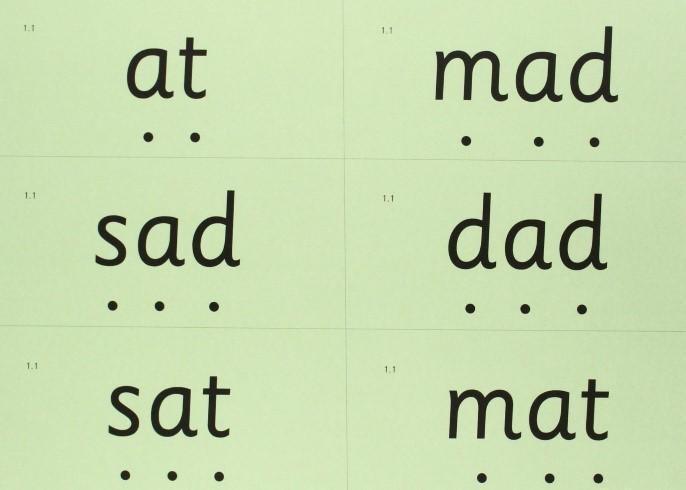 |
Oral blending and segmenting are key parts of learning to read and spell. Children learn to sound it out, or Fred Talk as we say at Stoneydown, through games, songs and daily practice. For example, children may hear: c-a-t → cat Children also practise segmenting words into their individual sounds, helping them to hear the sounds within words and apply this when spelling. Green words are words that can be sounded out and blended, like ‘dog’, ‘cat’. Nonsense words are words that are not real, but which help to assess whether your child has secured their identification of the sounds in words, as well as their ability to blend them. |
Initial sounds & Set 1

|
We teach initial sounds until children are secure and confident in recognising and producing them. When they are ready to move on, we begin to explore special friends. New sounds are taught using rhymes, stories, pictures, actions, games and repeated practice. These approaches help children remember the sounds and apply them independently. Children begin to read simple words containing the sounds they have learned, such as cat, dog, fish and ship. As their knowledge develops, they read and spell words containing three and four sounds, such as frog, chips and spring.
|
|

How to say set 1 sounds
 Click here to hear how the set 1 sounds should be pronounced.
Set 2 & Set 3
|
|
Once the Set 1 sounds are embedded, children move on to Set 2 and Set 3. These include digraphs and trigraphs, many of which represent vowel sounds, alongside some additional sounds. During phonics lessons and at home, children read books matched to their sound knowledge. This allows them to apply their phonics learning in context, develop fluency and become increasingly confident readers. |
|


How to say set 2 & set 3 sounds
 |
 |
| Click here to hear how the set 2 sounds should be pronounced. | Click here to hear how the set 3 sounds should be pronounced. |
Developing Reading Fluency and Comprehension
 |
As children progress, they learn more complex sounds and alternative ways of pronouncing sounds they already know. Alongside developing their decoding skills, children regularly listen to and discuss stories, explore pictures, make predictions and talk about characters and events. These support the development of comprehension and help children make meaning from what they read. |
Red words
|
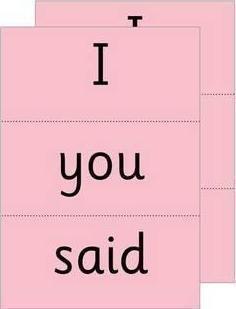
Having gained confidence with sounding and blending green words, your child will be taught about ‘red' words. These words are tricky words which contain spelling patterns that do not follow the phonetic rules and so the word cannot be fully sounded out, eg words like 'said' and ‘was’. They will learn why these words are tricky and identify the 'tricky letters.' As your child progresses through EYFS and KS1, they will learn a wide variety of 'red' words and be encouraged to read these speedily as they become more confident. |
 |
What happens in a phonics lesson?
Here are some videos that you can watch of phonics being taught in our school. Click on the images to watch the videos.


Danni teaching Set 3 Set 2 intervention session
Reading at home - RWI Phonics book bag books
All children accessing RWI across the school will bring home a RWI phonics book matched to their current phonics ability. Reading these books regularly, as well as re-reading the books, will support their reading immeasurably. The books are fully decodable and support their Read Write Inc. Phonics learning in the classroom. All Book Bag Books include notes for parents and carers on how to help your child at home with phonics.
 RWI Reading at home booklet
 Stoneydown KS1 reading at home parent guide Stoneydown KS2 reading at home parent guide
Read, Write Inc. website
Please see the parents’ section of the Read Write Inc. website for additional information, including useful videos and a pronunciation guide.
The RWI Phonics guide for parents can be accessed from the link below:
 Read, Write Inc. Phonics: A Guide for Parents
 Reception parent meeting slides
 KS1 parent meeting slides